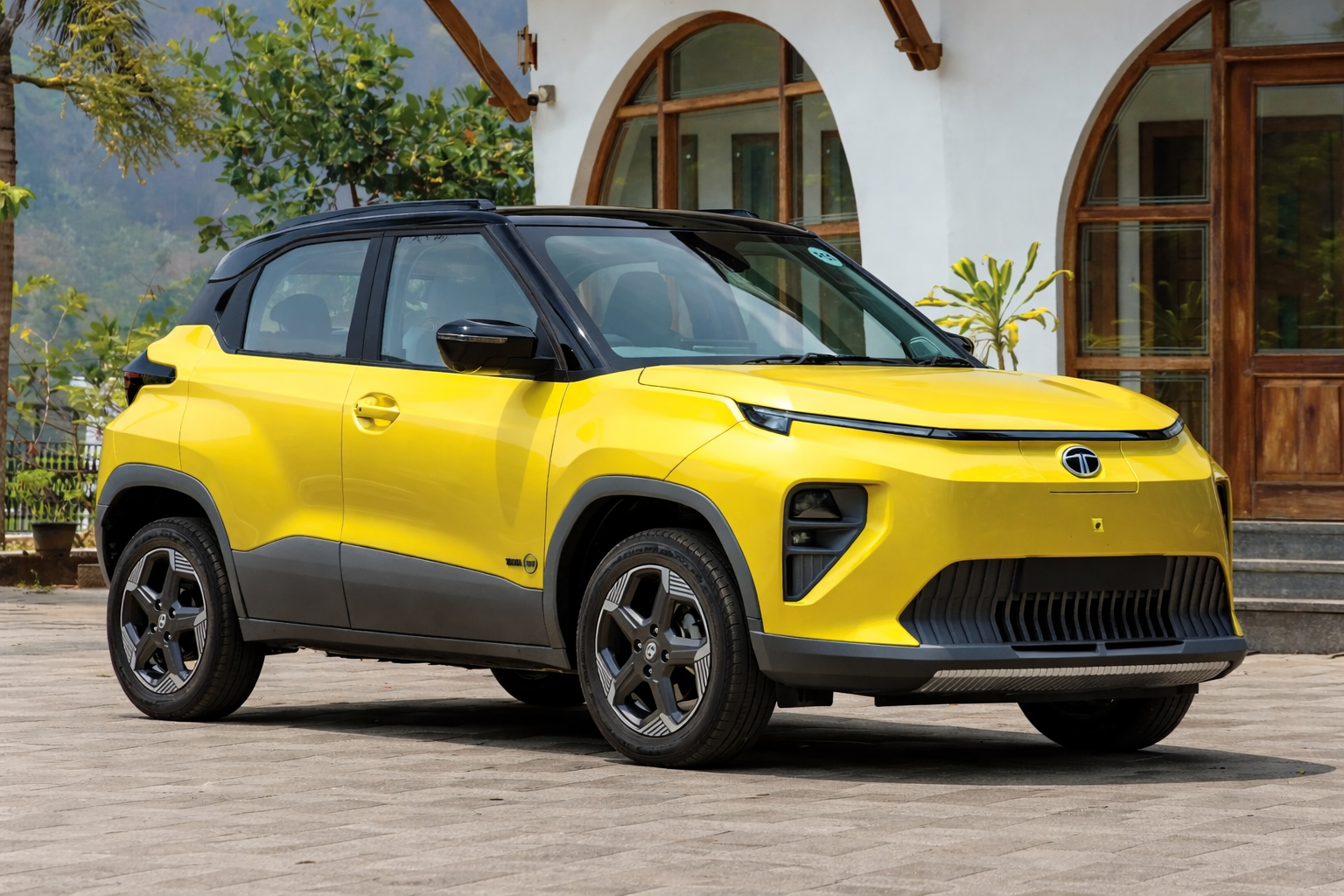
2026 Tata Punch EV Facelift: The “Long-Range” Micro SUV is Here!
This article looks at the 2026 Tata Punch EV makeover from the point of view of an Indian buyer and driver. Tata’s official information and coverage of the launch and test drives in the Indian auto press give us the specs and launch facts. I have referenced the sources for the official data (range, battery, charging) or hands-on impressions that I use.
What the 2026 Tata Punch EV facelift is aiming to be
The 2026 Tata Punch EV facelift is Tata’s updated sub-4-meter electric micro-SUV. It has a more grown-up look, more features, and two battery options. The goal is to make the Punch EV more appealing to a wider range of buyers, from budget-conscious city dwellers who need a short-range daily commuter to small families who want a longer highway range.
The facelift preserves the Punch’s high-riding stance and urban footprint, but it improves the tech and quality of the inside and adds a stronger powertrain option to boost performance and range. Official Tata literature and coverage of the launch make it obvious what the goal is: a longer range, better durability for Indian conditions, and more features.
Variants & powertrains
The Tata Punch EV facelift for 2026 comes with two battery sizes and power outputs/ranges that are said to be:
30 kWh battery: the first battery choice for city customers. Single electric motor with less power; Tata says the practical city range is between 280 and 375 km, depending on the test cycle and variation, with faster urban charging characteristics.
40 kWh battery (long-range) : a bigger pack for people who need to be able to drive longer distances between cities. Tata says that the car can go up to about 468 km (ARAI/C75 or C75 comparable claim on some materials), however in the actual world, it can go between 300 and 400 km, depending on how you drive. This buttoned-up pack also gives you more power for longer periods of time (around 120–130 PS and torque tailored for quick urban overtakes).
Drive modes, regen levels, and selectable braking levels are all still there, but they’ve been improved. You may choose between three drive modes (Eco, City, and Sport) and three to four levels of regenerative braking to find the right balance between efficiency and driveability. Higher trims come with more software features and comfort items, like ventilated seats, a sunroof, and a dual-screen in the top model.
Pricing, booking and deliveries
The 2026 Punch EV facelift will be priced reasonably when it comes out in February 2026, so it may beat or match other EV hatchbacks and affordable SUVs. According to official ex-showroom prices, the 40 kWh top trim costs between ₹9.69 lakh (beginning) and ₹12.59 lakh (top-spec), depending on the tax state and version. Tata Motors started taking orders with a deposit of about ₹21,000, and the first deliveries were planned for the end of February 2026. (Always check with your dealer for the final price and any state incentives that may apply.)
Quick tip: After registration and insurance, prices will be substantially higher in cities with higher registration fees. Use ex-showroom as a starting point.
Exterior & design: facelift changes explained
Tata’s facelift is more of an evolution than a revolution. Changes that are easy to see:
Front fascia: The bumper has been changed, the grilles and air intakes have been modified (EV style is kept to a minimum), and the LED headlight signature is sharper.
Back: In some trims, there are new LED tail lights with a connected light bar theme. The bumper and bottom diffuser have been changed to make them look cleaner.
Wheels and trims: The “mid-spec Adventure” variant has new designs for the alloy wheels, body cladding for the Adventure variant, and style cues for slightly increased underbody protection.
Colors: Tata added new color options and several two-tone finishes to make the car more appealing to buyers.
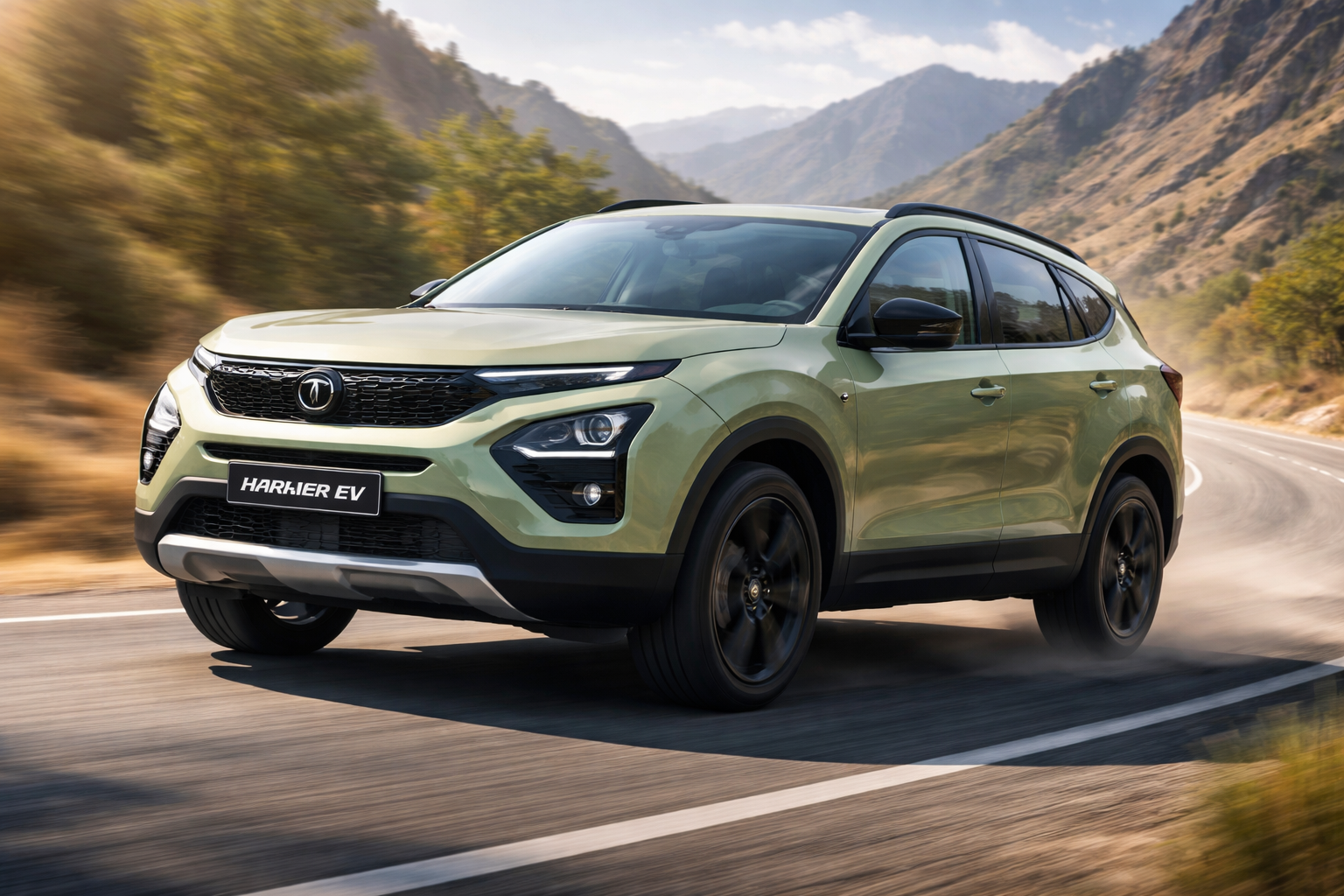
The redesign is meant to make the Punch’s whimsical lines look more grown-up. It reads better on the road and doesn’t get the “cute” label that many small SUVs get. Pictures from early assessments reveal that the facelift seems bigger and more useful in person.
Interior, infotainment & feature list
This is one of the facelift’s best features. Tata has always focused on making cabins that are full of value, and the Punch EV facelift keeps that going with nicer materials and more technology.
Some of the most important features across trims are:
- 10.25-inch central infotainment screen (Harman in some models) with wireless Android Auto and Apple CarPlay.
- 10-inch or complete digital driver display with a dual-screen arrangement in the top grade (cluster and infotainment).
- Front seats with ventilation and leatherette upholstery on higher grades.
- Wireless phone charging and climate control that works in several zones and automatically.
- Single-pane sunroof (for the top models).
- Higher-end models have a 360° camera, a tire pressure monitoring system (TPMS), keyless entry, and a push-button start.
Safety: 6 airbags in the middle and higher trims, ESC, ABS + EBD, and ISOFIX child seat anchors.
Cabin feel: Reviewers say the materials are softer and the fit and quality are better than the old Punch EV, notably on the dashboard trims and door pads. Space is good for the class, the Punch’s taller stance gives it more rear legroom and headroom than other cars in the same class. The trunk is big for a car that’s less than 4 meters long (good for weekend baggage or strollers).
Charging, battery tech and warranty
Charging speeds (as reported and claimed):
DC fast charging: Tata says that its fast-charging feature can charge the battery from 20% to 80% in about 26 to 56 minutes, depending on the size of the battery and the power of the charger. Many outlets say that it takes about 26 minutes to charge from 20% to 80% on the long-range in ideal conditions; Tata’s own specs list different numbers depending on the converter and charge curve. Real-world DC timings will change depending on the charger output and the temperature outside.
AC charging (home wallbox): 7.2 kW AC home chargers take between 3.5 and 5.5 hours to charge a battery, depending on its size and the onboard charger.
Portable 15A cable: good for emergencies but slow for full top-ups; good as a backup.
Technology and durability of batteries
IP67-rated battery and motor packing that can handle dust and water. This is vital for Indian monsoons and roads in rural areas.
The higher trims have a liquid-cooled battery pack that helps keep the battery charged and stable in hot weather.
Guarantee
Tata gives a full guarantee on the battery and motor (for example, 8 years or 1.6 lakh kilometers on the HV pack in some markets), as well as the usual vehicle warranty. Always read the specific terms of the guarantee and the pro-rata conditions for secondary markets.
Useful advice for owning things
A 7.2 kW wallbox for your house is the best way to charge your phone every day because it balances speed and battery life.
Don’t use DC fast charging often unless you require it for extended journeys; it wears out the battery faster.
For daily use, keep the state of charge between 20% and 90%. Only charge it to 100% when you’re getting ready for a lengthy trip.
Safety & ADAS
The Punch EV makeover adds new safety features:
There are a lot of safety features, like six airbags in the mid- and high-end trims, ABS and EBD, ESC traction control, and ISOFIX anchors.
High-beam assist and high-beam alert (newer safety features).
Higher-end models have a 360° camera and parking sensors that help with parking in cities and safety.
Note: Future OTA upgrades may add more semi-ADAS functions to the Punch long-range top trims. However, at launch, the suite is mostly just driver assists and convenience aids, not Level-2 autonomy.
Pricing breakdown & running costs
Launch ex-showroom (reported): ₹9.69 lakh – ₹12.59 lakh (depending on battery and trim). Check with your state’s ex-showroom to be sure.
Here are some extremely approximate monthly samples of running costs for a commuter in a city:
Assuming that electricity costs between ₹9 and ₹12 per kWh (the rate for homes fluctuates a lot).
If your real-world efficiency is 5.5 km/kWh (a realistic mix), the cost per km is about ₹0.18 to ₹0.22.
Cost of energy for 1,200 km per month: about ₹216–₹320 (extremely cheap compared to gas).
Maintenance: Electric vehicles (EVs) offer lower scheduled maintenance expenditures (no engine oil changes and fewer moving parts), but keep an eye on the wear on the tires, brakes, and suspension. Different dealer service programs exist.
BaaS and EMI
Tata might offer Battery-as-a-Service (BaaS) in some setups or financing plans where the cost of the battery is distinct from the cost of the car. Look at the total monthly payments for EMI + battery lease and outright purchase. BaaS usually lowers the initial cost but adds a recurring fee, which is helpful for buyers who don’t have a lot of money.
Competitors: who’s in the Punch EV’s crosshairs?
The main competitors in India in 2026 are:
If you want a lesser price and don’t require the extra capacity, select the Tata Tiago EV (a similar sister with a smaller footprint).
Maruti Suzuki EVs (if they are priced similarly) depend on when they are released in your area.
Hyundai and Kia compact electric hatchbacks, as long as they have similar ranges and amenities.
If you want more trunk room, range, or features, you can choose between the MG Comet EV, Citroen eC3, or Tata Curvv (if you want to cross-segment).
Punch EV has a higher stance, more cabin room, a bigger trunk than many hatchbacks, and a family-friendly design. It also has Tata’s EV technology and dealer network.
Punch EV’s drawbacks compared to its competitors: competitors with same range but lower weight or price might undercut some trims; in some segments, competitors might offer faster DC charging or a smoother ride.