India’s car market is about to witness something unexpected.
JSW Motors, a company best known for steel and infrastructure, has officially teased its first SUV for India. And if what many are saying in the industry is true, the launch might happen later this year.
This isn’t just another SUV release.
This is a big industrial company that is going directly into India’s fastest-growing car market, and that changes everything.
Why This Teaser Is a Big Deal
The SUV market in India is currently the most competitive part of the country’s auto sector. There is a lot of competition, from little SUVs to high-end electrified crossovers.
Now think about a brand that is supported by one of India’s major companies joining this fight.
That’s exactly what’s going on.
JSW Group has been quickly getting into the mobility business. Its relationship with global EV makers and ambitions in making electric cars have been in the news for months. This teaser makes one thing very clear:
JSW is not just dipping its toes in. It’s jumping in.
What We Know So Far
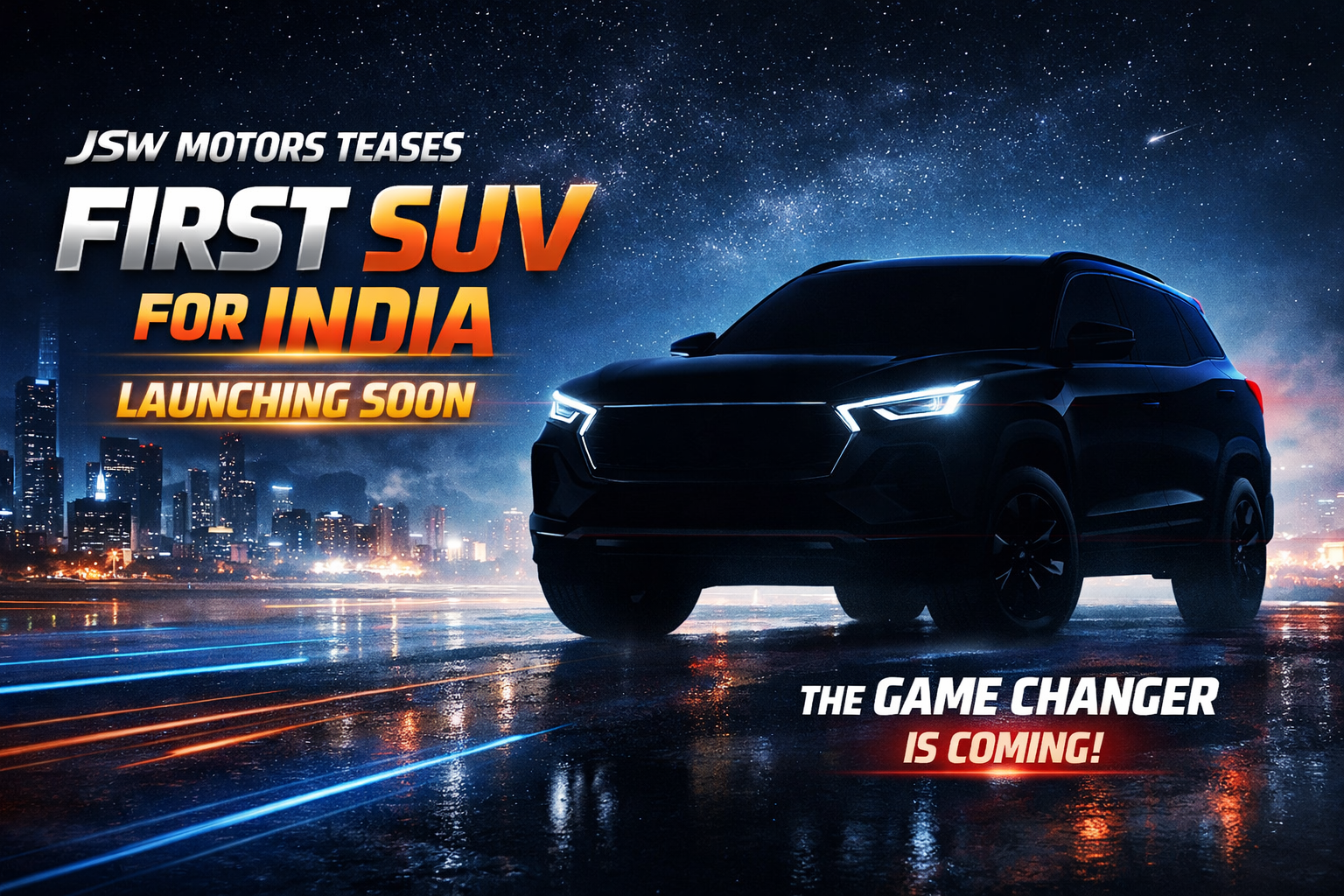
The teaser image (which came out through official means) shows a few fascinating things:
- LED DRLs that are sharp
- SUV attitude that is bold and upright
- Strong lines on the shoulders
- A wide grille presence
- Proportions of muscles
The business hasn’t shown the whole design yet, but the shape hints that the SUV will be modern and focused on city driving, with a strong presence on the road.
Some people in the industry think it might be an electric SUV, but it’s also possible that it’s a hybrid or ICE vehicle.
This is what really matters:
- It will be centered on India
- It will probably be priced competitively.
- It can come with a lot of technology.
Is This an Electric SUV?
JSW is really interested in making electric vehicles in India. The group has been tied to global alliances for electric vehicles and big investments in making electric vehicles.
India is moving toward electrification and giving money to states to help them buy electric vehicles. So, it makes sense to offer an electric SUV.
If it is electric, it will probably go after competitors like:
- Tata Nexon Electric Vehicle
- MG ZS EV
- XUV400 from Mahindra
- Hyundai electric SUVs that are coming out
If it runs on gas, it can be a challenge:
- The Hyundai Creta
- Kia Seltos
- Grand Vitara by Maruti
- Hyryder from Toyota
The competition is tough no matter what.
Possible Segment Positioning
This SUV could fit into one of these groups based on its teaser size and current market strategy:
- SUV of medium size (Creta Segment)
This is the most popular type of premium SUV in India. It’s the best place for features, prices, and people who want to buy.
- Small SUV (less than 4m)
Higher prices, more sales, and increased demand in cities.
- High-End Electric Crossover
If JSW wants to make a statement, it may go a little more high-end with an electric vehicle that focuses on technology.
A mid-size SUV looks like the best choice right now.
Why JSW’s Entry Could Disrupt the Market
This is very crucial.
Most of the car firms in India are either old ones or big global ones. JSW is not the same.
It is:
- Deeply rooted in Indian business
- Strong in money
- Able to make things on a vast scale
- Aggressive about investing in new sectors
That mix can cause a lot of trouble.
Existing players may feel pressure if prices are high and features are good.
Expected Features (Based on Market Trends)
While official specifications are still under wraps, here’s what buyers in this segment expect in 2026:
Exterior
- LED headlamps
- Connected LED tail lamps
- 17–18 inch alloy wheels
- Panoramic sunroof
- Flush door handles (if EV)
Interior
- Large touchscreen (10–12 inch)
- Fully digital instrument cluster
- Wireless Android Auto & Apple CarPlay
- Ventilated seats
- Ambient lighting
- Premium soft-touch dashboard
Safety
- 6 airbags standard
- 360-degree camera
- ADAS Level 2 features
- Electronic Stability Control
- TPMS
If JSW wants to make headlines, offering these as standard would instantly grab attention.
Pricing Strategy: The Real Game Changer
In India, pricing decides success.
Here’s a possible range:
- ₹10 – ₹12 lakh (if compact SUV)
- ₹12 – ₹18 lakh (if mid-size SUV)
- ₹15 – ₹22 lakh (if electric SUV)
If JSW undercuts rivals by even ₹50,000–₹1 lakh with better features, it can create instant buzz.
And since the brand is new in automotive, aggressive pricing is highly likely.
Manufacturing & Localization
JSW has a lot of industrial power.
The group already runs big factories in India. A lot of localization could:
- Cut down on the cost of making things
- Make prices better
- Make more money
- Get government benefits
If they focus on EVs, state-level subsidies and PLI benefits might help margins even more.
Launch Timeline
The teaser makes it sound like it will come out later this year.
Most likely schedule:
Full reveal: 3–4 months from now
Launch date: the holiday season of 2026
Before Diwali, you can make reservations.
The holiday season is still the best time for car sales in India. It makes sense to launch during this time.
What Makes This Launch Emotional for Indian Buyers?
There is more to this than meets the eye.
Foreign brands or firms with a long history in the global car industry have ruled India’s SUV market for years.
Now, a strong Indian business group is becoming involved.
This taps into a growing feeling:
- Made in India
- Made for India
- Made for highways in India
That emotional approach can work really well, as long as the quality of the product meets expectations.
Ownership Perspective: What Buyers Will Ask
People who buy SUVs in India nowadays are wise.
They ask before they book:
- How far can it go?
- What does it really cost to keep up?
- What is the value of resale?
- How good is the support for the service?
- JSW needs to make these obvious at launch.
In 2026, cars don’t sell just because they have cool features; they sell because they are useful.
If It’s Electric – The Bigger Story
If this SUV is electric, the effect is considerably bigger.
India’s use of electric vehicles is growing quickly. In big cities like these, charging stations are becoming more common:
- New Delhi
- Mumbai
- Bengaluru
- Hyderabad Pune
A major Indian company making an electric SUV at a reasonable price might speed up the adoption of EVs by a lot.
This might also put more pressure on Tata Motors, which is presently the leader in the EV SUV market.